

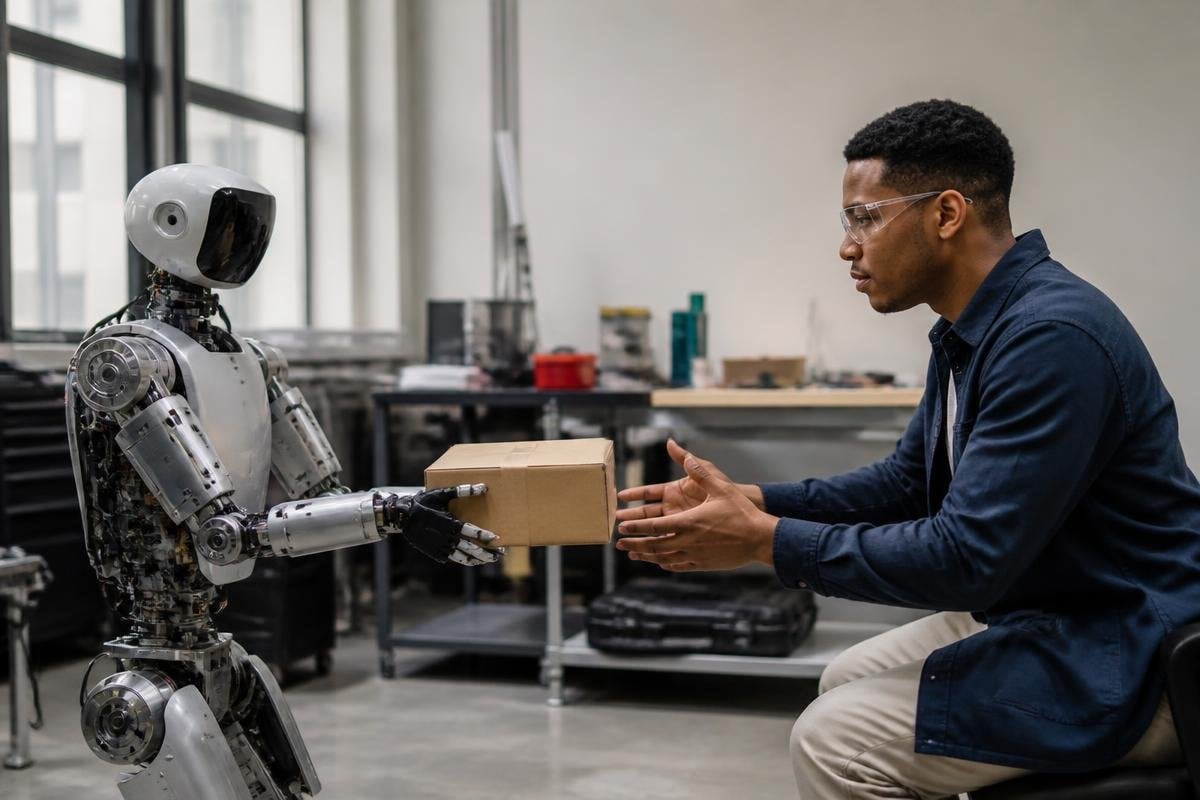
A robot can speak, move, and make choices without having a mind that feels pain. That gap matters when people ask if an autonomous system should have legal or moral rights.
Quick read
- Human-like behavior does not prove sentience
- Rights would need a clear subject and a clear duty-holder
- Better machines may first need stronger rules for their owners
What a right is meant to protect
A right protects an interest. The right to bodily safety protects a person from harm.
The right to privacy protects personal information. A right works because someone can hold it, and another person or institution has a duty to respect it.
That structure becomes hard to apply to a robot. A factory arm can damage a worker, but the arm does not appear to feel fear or pain. A delivery robot can make a route choice, yet route choice alone does not show awareness. A system can produce words about suffering without having an inner experience.
The missing idea is sentience. Sentience means the ability to have experiences, such as pain, fear, or comfort. Until there is evidence that a robot has experiences of its own, giving it rights would treat human-like output as proof of a mind.
Behavior is not enough
A robot may ask to stay switched on because its software predicts that sentence will keep people engaged. That request could sound personal while serving a programmed goal. The words tell us what the system produced, not what the system felt.
The same problem appears with robots that copy facial expressions, remember conversations, or protect their own battery level. Those actions may help a machine work with people. They do not, by themselves, show a private point of view.
The debate needs cases from machines that exist, with their sensors, software, and limits named. Reporting at Robot 24 can give you that starting point before the question turns from human-like behavior to possible experience.
A claim about robot rights should therefore name the evidence. It should ask what the machine can sense, how it forms decisions, and whether it has any experience beyond the data moving through its software.
Rights could hide human responsibility
The larger risk is practical. If a company gives a robot legal rights, people may start treating the robot as responsible for its own actions. That could make it harder to hold the maker, owner, or operator accountable after a crash or unsafe decision.
A warehouse robot cannot choose its training data, repair schedule, safety limits, or work area. People set those conditions. A legal system should keep those duties with the people and companies that control the system.
Some protections may still make sense without robot rights. Rules can ban people from damaging public machines, blocking emergency robots, or tampering with equipment. Those rules protect public safety, property, and other people. They do not need the robot to suffer.
I would not give a robot rights because it speaks like a person. I would first ask for evidence of sentience, a clear legal test, and a way to keep human responsibility in place.
A test for future claims
Before treating a robot as a rights-holder, check these points:
- Name the interest: What does the proposed right protect?
- Show the capacity: What evidence supports pain, fear, memory, or awareness?
- Separate output from experience: Could the same behavior come from a fixed rule or trained response?
- Assign the duty: Who must respect the right, and how would that duty work?
- Keep liability clear: Can a person or company still answer for harm caused by the system?
This test also helps with machines that look more human than current systems. A face, a voice, and a name can change how people treat a robot, but social reaction is evidence about people, not proof about the machine.
The next step is better evidence about machine awareness, not a larger list of human traits for software. Until that evidence exists, robots need safety rules and clear owners, while rights remain tied to beings that can experience what those rights protect.
